How to Choose the Right Dune Buggy for Dubai Desert Driving
Choosing a dune buggy in Dubai is less about picking the boldest-looking vehicle and more about matching the vehicle to the driver, the terrain and the kind of outing planned. Desert terrain can feel very different from a flat track. Soft sand, firm ridges, sudden dips and changing light all affect control. A sensible choice starts with knowing what the driver needs, then working through the practical details in a steady order.
Start with the driver, not the vehicle
Begin by being honest about experience. A first-time rider needs something predictable, easy to steer and not overly aggressive in acceleration. Someone with off-road experience may be comfortable with a more responsive off-road vehicle, but confidence on a normal road does not automatically translate to confidence on sand. The aim is to finish the outing in control, not to spend the whole ride reacting to surprises.
Age, height and body size matter more than many people expect. Feet should reach the pedals without stretching, the hands should hold the steering wheel with relaxed elbows, and the seating position should leave enough room to brace on uneven ground. A rider who feels cramped or perched high will tire quickly. If more than one person may drive, choose a setup that can be adjusted or suits the least experienced driver.
Decide what kind of outing you want
Next, define the purpose of the ride. A short, gentle introduction calls for a different choice from a longer desert route with steep dunes. Think about whether the ride is mainly for sightseeing, photography, a shared family outing or a more active drive. This helps narrow the choice before comparing engine type, seating layout or extra features.

Group plans also affect the decision. If others in the party are on a relaxed route, a high-powered buggy can feel out of place and make the pace harder to manage. If the route is more demanding, an underpowered vehicle may struggle on climbs or soft stretches. The right match keeps the pace smooth for everyone rather than pushing one vehicle beyond its comfort zone.
Check the basics before the styling
Once the purpose is clear, look at the mechanical fundamentals. The engine type shapes how the buggy delivers power. A responsive engine can be exciting, but it also demands smoother inputs on sand. A calmer setup is often easier for new drivers because it gives more time to correct a line or slow down before a crest. Ask how the vehicle behaves in soft sand, not just how quickly it accelerates on firm ground.
Condition matters as much as specification. Panels should sit neatly, steering should feel consistent, and the vehicle should not show obvious signs of heavy wear in the areas that matter most. Tyres deserve close attention because they are the only contact point with the sand. Check that they look evenly worn and correctly fitted. If tyre pressure is discussed, it should be handled by someone who understands the terrain and the vehicle, since the wrong setting can affect grip and stability.
Safety equipment should be straightforward to inspect without tools. A helmet should fit properly, sit level and fasten securely. A safety harness should lie flat across the body, with no twisted straps or loose mounting points. If anything looks damaged, missing or poorly fitted, do not treat it as a minor detail. Move to another option or ask for the issue to be resolved before any ride is considered.
Read the route and the conditions
The same buggy can feel different from one day to the next. Heat, wind and sand softness all change how the terrain behaves. In softer sand, steering inputs need to be gentle and momentum has to be managed carefully. On firmer tracks, the vehicle may feel more settled, but ruts and hidden dips can still catch a driver out. A good choice accounts for the conditions rather than assuming every desert route is the same.
Ask what level of route is being considered and how the driver is expected to handle it. Terms can sound vague, so focus on concrete details: gentle dunes, steeper climbs, open desert, marked tracks or mixed terrain. If the plan includes unfamiliar areas, a buggy that is easy to control at lower speed is usually the wiser pick. The goal is to enjoy the sand dunes without turning every crest into a test of nerve.
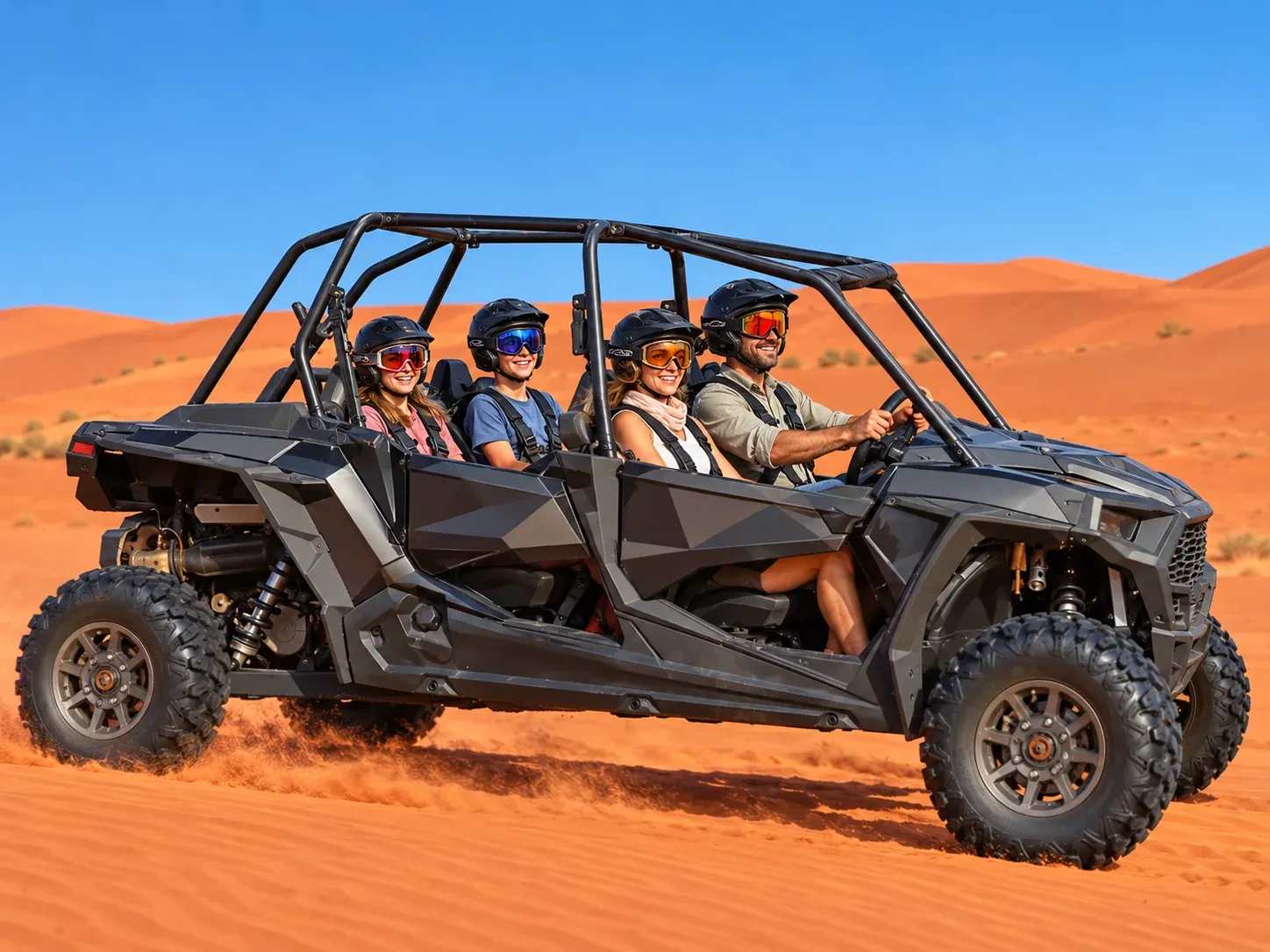
When comparing options, it can help to keep notes on fit, control, condition and safety gear. Sites such as dune-buggy-dubai.net may be used as a starting point for orientation, but the decision should still come back to the vehicle and the planned ride. A neat appearance is useful, yet it should never replace a careful look at the parts that affect control.
Compare comfort and control together
Comfort is not a luxury in the desert. Dust, heat and constant movement make a poor seating position feel much worse over time. Sit in the buggy if that is allowed and notice whether the seat supports the body, whether the pedals feel natural and whether visibility is clear from the driving position. A driver who has to lean forward to see the track ahead will become tired and less precise.
Control should feel calm and direct. Steering that feels loose, brakes that feel uneven or a vehicle that pulls to one side are all signs to pause. Brake and steering concerns should be left to a qualified professional to assess. Simple observations are enough for a buyer or rider: note the issue and avoid relying on a vehicle that does not feel sound. Do not attempt mechanical fixes in the interest of saving time.
If choosing between two similar buggies, give more weight to predictable handling than to extra features. A simpler vehicle that feels balanced is often more rewarding than one packed with details that distract from the drive. Think about the whole experience: getting in, fastening the helmet and harness, seeing the terrain, holding a steady line and stopping comfortably.
Ask the right questions before committing
Before making a final choice, ask clear questions and listen for clear answers. The point is not to interrogate anyone, but to confirm that the vehicle suits the plan and that the basics have been considered. Useful questions include:
- What level of desert route is this buggy best suited to?
- What should a new driver watch on soft sand?
- Are the helmet and safety harness suitable for the rider?
- How is tyre pressure checked for the terrain?
- What should happen if a control feels unusual during the ride?
Vague answers are a signal to slow down. A suitable choice should come with a clear explanation of driving techniques such as smooth steering, steady throttle input and early slowing before dips or turns. If the advice sounds reckless, especially around speed on dunes, treat that as a serious warning. Good desert driving depends on patience and awareness, not on forcing the vehicle through difficult ground.

Make the final choice with a clear head
By the end, the decision should feel practical rather than impulsive. Choose the buggy that fits the driver, matches the route, shows sound condition and has safety gear that fits properly. Avoid being swayed by power alone. On sand, control, visibility and steady handling often matter more than raw pace.
It also helps to leave room for judgment on the day. If conditions look harder than expected, a shorter or gentler route is a better choice than pushing ahead. A well-matched dune buggy makes the desert feel approachable, while a poor match can make even a simple ride tense. Take the time to compare the essentials, and the final pick will be far easier to trust once the dunes are ahead.